Have you ever opened Instagram with the intention of posting something for your business, only to realise that you have no idea what to post?
You are not alone. Many businesses and content creators struggle to maintain consistency on social media. They may have excellent products, creative ideas, and valuable information to share, but without a clear plan, their content often becomes irregular, repetitive, or disconnected from their marketing goals.
This is where a social media content calendar becomes essential.
A content calendar is more than a schedule of posts. It is a strategic tool that helps businesses organise their ideas, plan their messaging, maintain consistency, and create content that supports their overall marketing objectives.
In today’s competitive digital landscape, successful social media marketing is not simply about posting frequently. It is about sharing the right content, with the right audience, at the right time.
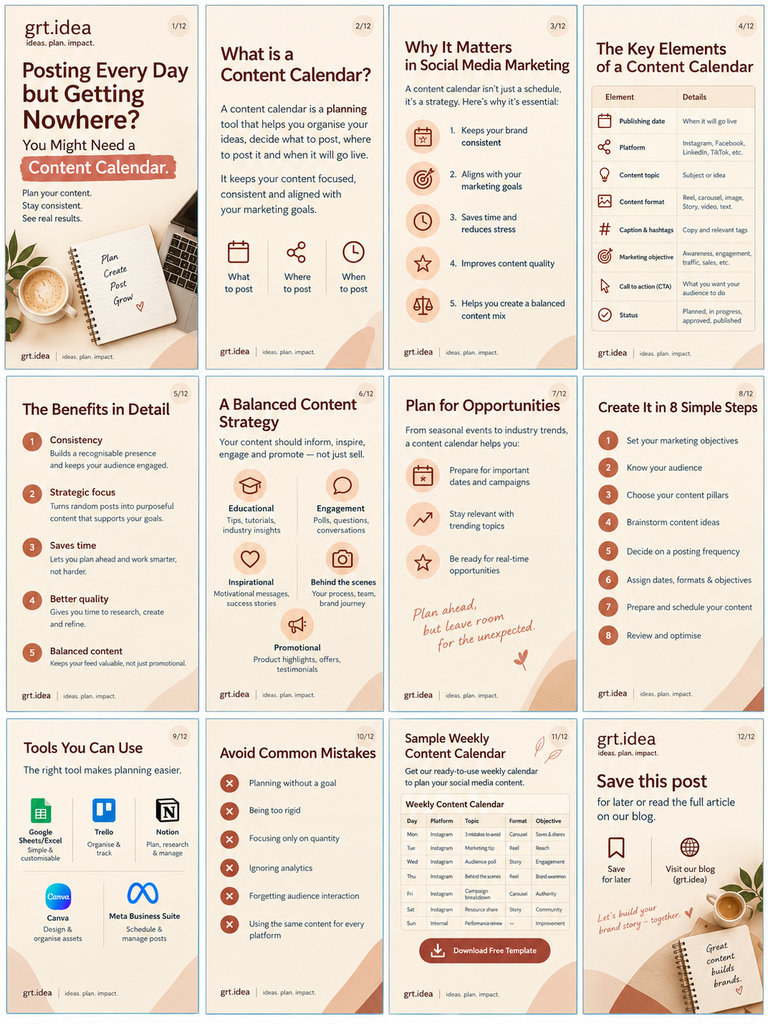
What Is a Social Media Content Calendar?

A social media content calendar is a planning document that outlines what content you will publish, where you will publish it, and when it will go live.
It can be created using a simple spreadsheet, a calendar application, or a dedicated social media management platform.
A well-organised content calendar typically includes:
- Publishing date: When the content will be posted.
- Social media platform: Instagram, Facebook, LinkedIn, TikTok, or other channels.
- Content topic: The subject or idea behind the post.
- Content format: Reel, carousel, image, Story, video, or text post.
- Caption and hashtags: The accompanying copy and relevant hashtags.
- Marketing objective: Whether the post aims to increase awareness, engagement, website traffic, or sales.
- Call to action (CTA): What you want the audience to do after viewing the content.
- Status: Whether the content is planned, in production, approved, or published.
These elements help transform random posting into a structured and purposeful marketing activity.
Why Is a Content Calendar Important in Social Media Marketing?
1. It Helps Maintain Consistency
Consistency is one of the most important aspects of building a recognisable social media presence.
When a business publishes content regularly, it creates more opportunities to connect with its audience and communicate its brand message. However, maintaining consistency becomes difficult when every post is created at the last minute.
A content calendar helps you plan ahead, establish a realistic posting frequency, and avoid long periods of inactivity.
For example, a small skincare brand might decide to publish three times a week:
- Monday: Educational skincare tips.
- Wednesday: Product benefits or demonstrations.
- Friday: Customer experiences or frequently asked questions.
This simple structure makes content planning easier while giving the audience different reasons to engage with the brand.
Remember, consistency does not mean posting every day. It means maintaining a schedule that you can realistically sustain.

2. It Aligns Content With Marketing Goals
Every social media post should serve a purpose.
Without a content calendar, businesses may focus on publishing attractive images or trending videos without considering how these posts contribute to their marketing objectives.
A strategic calendar connects individual posts to broader goals, such as brand awareness, audience engagement, lead generation, website traffic, or sales.
For example, if your objective is to increase brand awareness, you might prioritise educational Reels, relatable content, and shareable industry insights.
If your objective is lead generation, you could plan content that highlights a problem, explains your solution, and directs interested users to a landing page.
When each post has a clear objective, your social media activity becomes more purposeful and easier to evaluate.
3. It Saves Time and Reduces Stress
Creating content every day can be exhausting, especially for small business owners and marketing teams managing multiple responsibilities.
A content calendar allows you to plan several posts in advance rather than deciding what to publish at the last minute.
You can dedicate specific days to brainstorming ideas, writing captions, designing graphics, recording videos, and scheduling posts.
This process, often called batch content creation, helps reduce repeated tasks and makes better use of your time.
Instead of asking yourself, “What should I post today?” you can focus on improving the quality of the content you have already planned.
4. It Improves Content Quality
Rushed content often lacks a clear message, strong visuals, or a meaningful call to action.
Planning ahead gives you time to research topics, understand your audience’s questions, develop creative concepts, and review your content before publishing.
You can also ensure that your posts reflect your brand’s voice, visual identity, and communication style.
For example, a digital marketing agency could plan a carousel explaining common social media mistakes, followed by a Reel demonstrating how to improve a caption, and then a case study showing the impact of a well-planned strategy.
Each piece of content can build on the previous one, creating a more valuable experience for the audience.
5. It Creates a Balanced Content Strategy
One common social media mistake is publishing too much promotional content.
While promoting products and services is important, audiences also want information, inspiration, entertainment, and opportunities to interact with a brand.
A content calendar helps you maintain a healthy balance between different content categories.
Consider these five content pillars:
- Educational content: Tips, tutorials, industry insights, and how-to guides.
- Engagement content: Questions, polls, quizzes, and conversation starters.
- Inspirational content: Motivational messages, success stories, and relatable experiences.
- Behind-the-scenes content: Your process, team, work culture, or brand journey.
- Promotional content: Product highlights, service explanations, offers, and testimonials.
The exact balance depends on your audience and objectives. The key is to ensure that your content provides value rather than constantly asking people to buy something.
6. It Helps You Plan Around Important Dates and Trends
Seasonal events, holidays, industry occasions, product launches, and relevant awareness days can create valuable opportunities for social media marketing.
A content calendar helps you identify these opportunities early and prepare content that feels timely and relevant.
For example, a beauty brand could plan content around a product launch, a seasonal skincare routine, or a festive makeup look.
Planning in advance also gives your team time to prepare visuals, coordinate campaigns, and ensure that the messaging is appropriate for the occasion.
However, a calendar should not be so rigid that you miss relevant real-time opportunities. Leave room for timely trends and spontaneous ideas that genuinely suit your brand.
7. It Strengthens Brand Identity
A strong brand is built through repeated, recognisable experiences.
Your audience should gradually become familiar with your brand’s tone of voice, visual style, values, and areas of expertise.
A content calendar makes it easier to maintain this consistency across different posts and platforms.
You can plan a cohesive visual identity, repeat important brand messages, and develop recurring content series that audiences begin to recognise.
For instance, a marketing agency might introduce a weekly feature called “Marketing Tip Tuesday” or publish a monthly breakdown of successful advertising campaigns.
Over time, these recurring themes can help establish familiarity and position the brand as a reliable source of information.
8. It Makes Team Collaboration Easier
When multiple people are involved in social media marketing, a lack of planning can create confusion.
Designers may not know which graphics to create, writers may be waiting for topics, and managers may be unsure which posts are ready for approval.
A shared content calendar provides visibility into the entire process.
Everyone can see upcoming posts, deadlines, responsibilities, and approval statuses. This reduces miscommunication and helps the team work towards shared objectives.
Even if you manage your social media alone, a calendar helps you organise your own workflow and track progress.
9. It Helps You Measure Performance and Improve Results
Publishing content is only one part of social media marketing. Understanding how that content performs is equally important.
A content calendar can be combined with performance tracking to identify which topics, formats, and messages resonate with your audience.
Depending on your objectives, useful metrics may include:
- Reach and impressions for brand awareness.
- Shares and saves for content value and audience interest.
- Comments and engagement rate for interaction.
- Link clicks and website visits for traffic.
- Leads and conversions for business results.
Reviewing these metrics helps you make informed decisions about future content.
For example, if educational carousels consistently receive more saves than promotional graphics, you may decide to develop more educational content while continuing to support your sales objectives.
A content calendar is therefore not just a planning tool. It can also become part of a continuous improvement process.
How to Create an Effective Social Media Content Calendar

You do not need expensive software or complicated systems to get started. Follow these practical steps.
- Define your marketing objectives. Decide what you want your social media activity to achieve. Your objectives might include increasing brand awareness, building a community, generating leads, or driving sales.
- Understand your target audience. Identify your audience’s interests, challenges, questions, and preferred platforms. Your content should address their needs rather than simply reflect what your business wants to promote.
- Choose your content pillars. Select three to five recurring content categories that support your brand positioning and marketing goals.
- Brainstorm content ideas. Develop ideas under each pillar. Look at frequently asked questions, customer feedback, industry developments, common mistakes, and problems your products or services solve.
- Choose a realistic posting frequency. Start with a manageable schedule. For example, three posts per week may be more effective for your business than attempting to publish daily and struggling to maintain quality.
- Assign dates, formats, and objectives. Decide when each post will be published, which platform it belongs to, whether it will be a Reel or carousel, and what you want it to achieve.
- Prepare and schedule content. Write captions, design visuals, review your messaging, and schedule posts where appropriate. Leave enough flexibility to respond to timely events and audience conversations.
- Review and optimise. At the end of each week or month, review your results. Identify what worked, what did not, and what you should adjust in your next calendar.
Which Tools Can You Use to Create a Content Calendar?
The best tool depends on your workflow, budget, and the number of platforms you manage.
- Google Sheets or Excel: Ideal for beginners who want a simple, customisable planning system.
- Trello: Useful for organising content ideas and tracking production stages.
- Notion: Helpful for combining content planning, research, captions, and project management.
- Canva: Useful for designing social media graphics and organising creative assets.
- Meta Business Suite: Helpful for managing and scheduling eligible Facebook and Instagram content.
You do not need to use all these tools. Choose one that makes your process simpler and helps you stay organised.
Common Mistakes to Avoid When Using a Content Calendar
A content calendar is only effective when it supports a thoughtful strategy. Avoid these common mistakes:
- Planning without a goal: Every post does not need to generate sales, but your overall content mix should support a clear objective.
- Being too rigid: Leave room for relevant trends, audience conversations, and unexpected opportunities.
- Focusing only on quantity: Publishing more content does not automatically mean better results. Prioritise quality, relevance, and consistency.
- Ignoring analytics: If you never review performance, you may continue creating content that does not support your goals.
- Forgetting audience interaction: Social media is a two-way communication channel. Respond to comments, answer questions, and participate in conversations instead of treating publishing as the entire job.
- Creating the same content for every platform: Adapt your format, messaging, and presentation to suit the platform and the expectations of its audience.
Conclusion: Plan Your Content, Strengthen Your Strategy
A social media content calendar helps transform content creation from a last-minute task into a structured marketing process.
It supports consistency, saves time, improves content quality, strengthens brand identity, and helps businesses understand what works for their audiences.
A content calendar is the plan, not the strategy itself.
Your strategy determines what you want to achieve, who you want to reach, and what message you want to communicate. Your content calendar turns that strategy into organised, actionable content.
Whether you are a small business owner, a content creator, or a digital marketing professional, planning your content in advance can help you work more efficiently and communicate more effectively.
At grt.idea, we believe that meaningful marketing begins with a clear idea, a thoughtful plan, and purposeful execution.
Because great content is not just about showing up. It is about showing up with a purpose.